Our experience with ColecoVision retro gaming
Our Team’s ColecoVision Retro Gaming Experience
Let’s be honest, when we first fired up our ColecoVision, we were expecting a quaint relic, but what we got was a genuine shock. This wasn’t just a step up from the Atari 2600 we’d dabbled with; it was a quantum leap. The graphics were sharper, the sound more complex, and the games felt astonishingly close to their arcade parents. That initial shock quickly matured into a deep appreciation, leading our team on a journey to understand, collect for, and ultimately fall in love with this pioneering piece of 1980s hardware. This is our hands-on account of ColecoVision retro gaming today.
Why We Still Love the ColecoVision
In a sea of modern 4K consoles, the ColecoVision’s enduring appeal isn’t about nostalgia alone. It’s about recognising a true innovator that dared to bring the arcade experience home in a way no other console of its era could consistently manage. Its combination of bold hardware and ambitious software created a unique identity that still resonates with players seeking a tangible, challenging slice of gaming history.
The Hardware That Dared
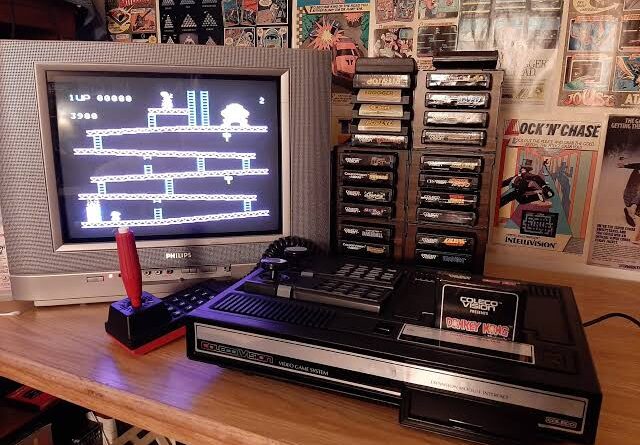
The ColecoVision was a technical powerhouse in 1982. Its Z80 CPU and dedicated graphics chip gave it a clear edge over the Atari 2600, allowing for more detailed sprites, richer colours, and smoother scrolling. Then there were the iconic ‘Super Action’ controllers. With their numeric keypads, joysticks, and four trigger buttons, they were complex but opened up new gameplay possibilities. While the stock controllers are notoriously fragile, their design ambition is a big part of the console’s charm.
The Games That Defined It
Hardware means nothing without software, and Coleco secured a killer app: Donkey Kong. The included pack-in cartridge wasn’t a cut-down version; it was a staggeringly faithful arcade port that sold the system’s promise immediately. This was followed by other brilliant conversions like Zaxxon, Lady Bug, and Mouse Trap, which felt light-years ahead of what was available on other home systems. These arcade-perfect ports weren’t just games; they were statements of intent.
The Best ColecoVision Games We’ve Played
Building a collection is one of the great joys of retro gaming. Through years of play, trade, and community chatter, we’ve curated a list of titles that we believe represent the absolute pinnacle of the ColecoVision library. These games aren’t just historically important; they remain genuinely fun and engaging to play today.
Classic Must-Plays
Every collection needs these foundational titles. They are the system’s hall of fame, often cited for good reason.
- Lady Bug: This maze-chaser is a masterpiece of design. With rotating gates, adjustable difficulty, and incredibly tight gameplay, it’s infinitely replayable and arguably better than many arcade games of its type.
- Venture: A pioneering dungeon-crawler that perfectly captures the thrill of exploration and risk. Its simple concept—grab treasure while avoiding monsters—is executed with panache and a real sense of tension.
- Mr. Do! A fantastic blend of Dig Dug and monster-dodging chaos. The ability to both tunnel and use a bouncing ball weapon creates dynamic, frantic gameplay that never gets old.
Hidden Gems & Modern Homebrew
Beyond the classics lies a treasure trove of lesser-known wonders and brand-new experiences. The homebrew scene, particularly on platforms like AtariAge, is incredibly active, with talented developers creating games that push the original hardware to new limits. Titles like Mecha-8, Zombie Near, and Princess Quest are modern miracles that feel both fresh and authentically Coleco. Discovering these is like unearthing lost gems from an alternate 1980s.
The Real Cost of ColecoVision Retro Gaming
Jumping into ColecoVision collecting in 2024 requires a realistic budget. Prices have stabilised but reflect the console’s niche status. Unlike more common systems, finding a complete, working setup in the UK involves some hunting and an understanding of the market’s tiers.
Console & Game Prices Today
A basic, untested console with one controller might fetch £50-£80 on eBay UK. A tested, good-condition unit with cables and controllers typically ranges from £120 to £200. For peace of mind, dedicated UK retro sellers like Retro Towers offer fully tested systems, often with a short warranty, but at a premium. For games, common cartridges start around £10-£20, while rarer titles like Tarzan or WarGames can easily hit £100+. It’s worth checking CeX (Webuy.com) occasionally, as they do stock retro consoles and games, though ColecoVision items are rare and sell quickly.
The Hidden Costs: Mods & Upkeep
The initial purchase is just the start. The stock RF output is fuzzy on modern TVs. Investing in an RGB SCART mod from a reputable UK modder is almost essential for a crisp picture and can cost £80-£150 fitted. Furthermore, the original power supplies are failure-prone, so a modern replacement is a wise £20-£30 investment. Controller refurbishment kits are also common purchases, as the joysticks wear out.
Buying a ColecoVision in the UK: Our Advice
Navigating the UK market requires a specific strategy to avoid costly mistakes, especially concerning video standards and modifications.
Where to Shop Safely
We recommend starting with trusted UK retro game shops that specialise in refurbished hardware. Sellers like Retro Towers have built reputations for quality. The marketplace on the AtariAge forum is also an excellent resource, where knowledgeable UK fans often trade. While US eBay listings can seem cheaper, remember to factor in high shipping costs, potential import VAT (20%), and the fact that NTSC consoles will run at the wrong speed on most older UK TVs without modification.
Essential Checks Before You Buy
Always ask the seller these key questions: Is it a PAL or NTSC model? A PAL model ColecoVision outputs a 50Hz signal, which is correct for the UK, but often results in slightly slower gameplay and black borders. Does it include the original power brick? Has it been tested for video and sound output? If modded, who performed the work? An RGB SCART modification from a known UK specialist is a huge plus. Finally, inspect photos closely for yellowing plastic and controller integrity.
Living With a ColecoVision: The Quirks & Triumphs
Owning a ColecoVision is a hands-on hobby, not a plug-and-forget experience. It’s a relationship with a piece of history that comes with unique daily joys and occasional frustrations.
The Daily Grind
The ritual is part of the charm: blowing on a cartridge (though we shouldn’t!), slotting it in with a satisfying *thunk*, and hitting the power switch. The reliability of cartridge-based gaming, with no loading times, is a joy. The challenges are real, though. You become adept at diagnosing graphical glitches, cleaning cartridge contacts, and gently nursing aging controllers. Visiting places like the National Videogame Museum in Sheffield and seeing their preserved consoles puts our own tinkering into a wonderful historical context.
The Community Connection
This is where the hobby truly comes alive. The ColecoVision community, though niche, is passionate and incredibly supportive. UK fans often trade on the AtariAge forum’s marketplace, share repair tips, and celebrate new homebrew releases. Knowing there are others out there keeping this platform alive makes troubleshooting a broken controller or hunting for a rare game a shared adventure rather than a solitary chore.
Frequently Asked Questions
Is a ColecoVision worth buying over a modern mini console or emulator?
If you value the authentic, tactile experience with original hardware and controllers, then yes, it’s worth it. Emulators and mini consoles offer convenience, but they can’t replicate the specific feel, challenge, and connection to history that using the real hardware provides. It’s a hobbyist’s choice.
What’s the main difference between PAL and NTSC ColecoVisions?
The key difference is the video signal output. A PAL unit outputs at 50Hz, which was the UK standard, often resulting in a slightly slower game speed and black borders on the screen. NTSC units (from the US/Japan) run at 60Hz, which is how the games were originally designed to play. Many UK collectors now seek out NTSC consoles and use them with upscalers or modded CRTs for the intended experience.
Can I use a modern TV with a ColecoVision?
You can, but it’s not straightforward. Very few modern TVs have an RF aerial input. The best route is to get your console modded for RGB SCART or composite video, then use a quality upscaler (like an OSSC or Retrotink) to convert the signal to HDMI. This preserves picture quality and reduces lag.
Are the games still being made for it?
Yes! The homebrew scene is vibrant. Talented developers create and sell brand-new physical cartridges, often with full boxes and manuals. Websites like AtariAge are the central hub for these releases, offering everything from completed games to limited-edition masterpieces.
How reliable is a 40-year-old console?
The core hardware is generally robust, but the supporting components are points of failure. The original power supply is infamous for failing and can damage the console. We always recommend using a modern replacement. Controllers also wear out but can be refurbished with new parts available online.
Ultimately, our experience proves the ColecoVision isn’t just a museum piece; it’s a vibrant, challenging, and deeply rewarding portal to gaming’s golden age.